tree care resources
-
Some tree care is best left to a professional. Arborists are trained in tree biology, pruning, tree health, and safe tree care practices. Look for a qualified professional. The International Society of Arboriculture (ISA) maintains a directory where you can search for credentialed arborists.
Find an Arborist through the International Society of Arboriculture
Before hiring an arborist:
Ask about credentials. Look for an ISA Certified Arborist or another appropriately qualified tree care professional.
Ask for proof of insurance. A reputable tree care company should be able to provide proof of appropriate liability and workers' compensation insurance.
Get multiple estimates. For larger projects, consider getting estimates from more than one company. The lowest estimate isn't necessarily the best choice.
Ask for a written estimate. Make sure you understand what work will be performed, what equipment will be used, and the total cost.
Ask about the proposed pruning. A good arborist should be able to explain why particular branches need to be removed and what the intended outcome is.
Avoid topping. Be cautious of anyone who recommends topping a healthy tree as a routine maintenance practice.
Don't feel pressured. Be especially cautious of unsolicited tree service offers following a storm or other event. For additional guidance:
International Society of Arboriculture: Why Hire an Arborist?
International Society of Arboriculture: Find an Arborist
-
Good tree care starts before a tree goes into the ground. Choosing the right tree for the site, planting it correctly, and providing appropriate care during establishment can make a major difference in its long-term health.
Before planting, consider:
How much space the tree will have at maturity
Available sunlight
Soil and drainage conditions
Water requirements
Proximity to buildings, sidewalks, streets, and utilities
Overhead and underground utilities
The tree's mature height and canopy spread
For Idaho-specific information on choosing and caring for trees:
-
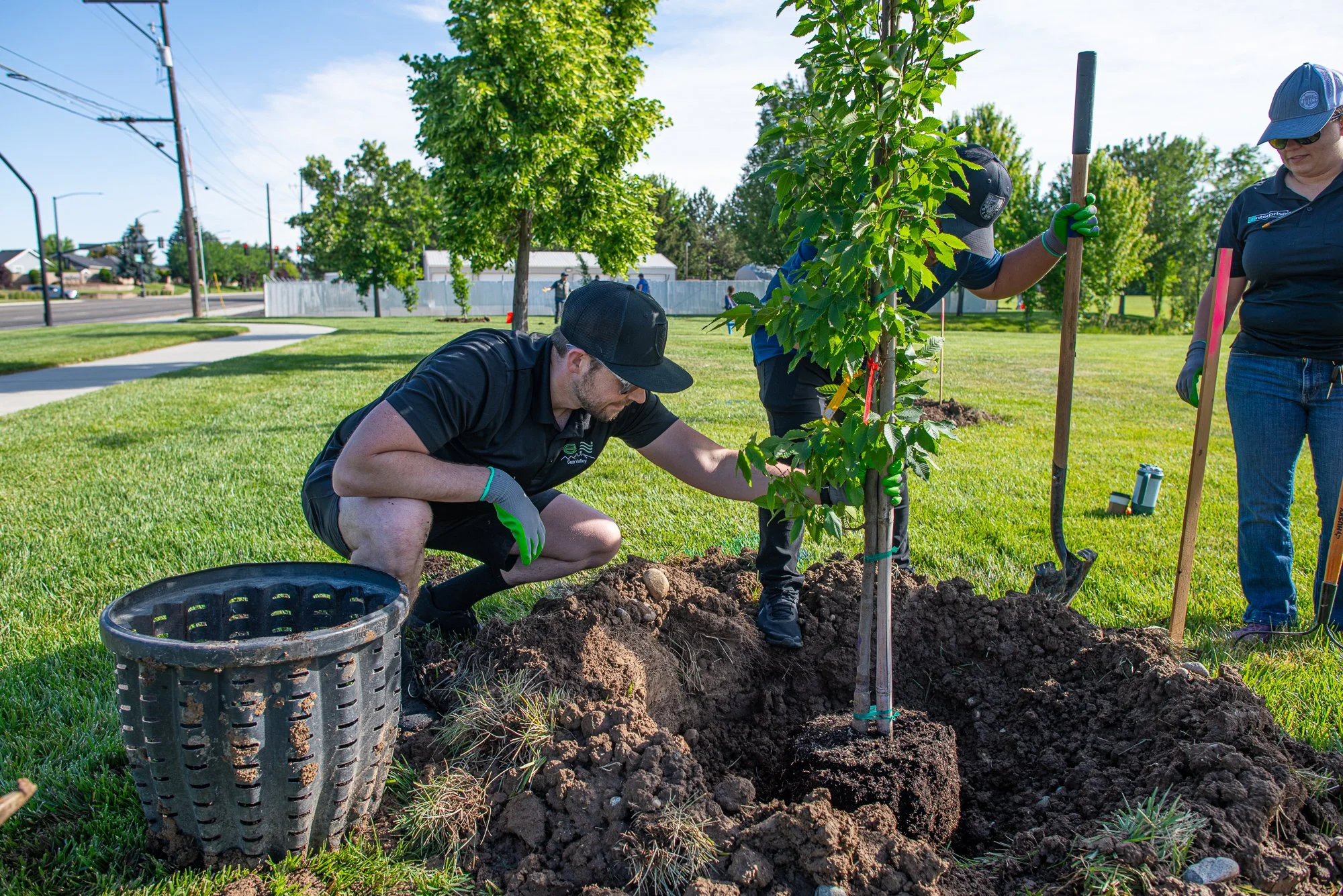
Planting your tree at the right depth and time of year gives it the best chance to establish healthy roots.
Planting Depth
Plant the tree at the root flare. The root flare is where the trunk begins to widen and the main roots emerge. It should be at or slightly above the surrounding soil level.
Your planting hole should be no deeper than the tree's root ball and 2 to 3 times wider. Avoid burying the trunk or root flare, as planting too deeply can restrict root growth and lead to long-term tree health problems.
After planting, water thoroughly and add 2 to 4 inches of mulch around the tree, keeping mulch away from the trunk.
When to Plant in Idaho
Spring and fall are generally the best times to plant trees in Idaho.
Spring: Plant after the ground has thawed and is workable, giving the tree time to establish roots before summer heat and drought.
Fall: Plant after temperatures begin to cool but while the ground is still workable. Fall planting allows roots to continue developing before winter and can reduce the stress associated with summer heat.
Avoid planting when the ground is frozen, waterlogged, or extremely hot and dry.Detailed planting instructions:
Arbor Day Foundation: How to Plant Balled and Burlapped Trees
Idaho 811: Call Before You Dig
-
Water is one of the most important parts of establishing and maintaining a healthy tree, especially in Idaho's dry climates.
Newly planted trees need consistent watering. During the first few years after planting, water deeply and regularly during dry periods. As a tree becomes established, gradually expand the area you water beyond the original root ball.
Water deeply, not just frequently. Short, shallow watering can encourage a shallow root system. Instead, water slowly and thoroughly so moisture reaches deeper into the soil.
Check the soil before watering. Soil conditions vary depending on your location, soil type, weather, and tree species. Don't rely solely on a set schedule. Check the soil several inches below the surface to determine whether your tree needs water.
Don't overwater. Constantly wet soil can damage roots and contribute to tree health problems.
For more information:
-
Mulch helps conserve soil moisture, moderate soil temperatures, reduce competition from grass and weeds, and protect tree roots.
Use organic mulch when possible. Wood chips, bark, and other organic materials are good options.
Create a wide mulch ring. Spread mulch over the tree's root zone rather than creating a small ring immediately around the trunk.
Keep mulch away from the trunk. Never pile mulch against the trunk or create a "mulch volcano." Excess moisture around the trunk can contribute to decay and other problems.
A layer of approximately 2 to 4 inches of mulch is generally appropriate. As the tree grows, expand the mulch area rather than increasing the depth.
For more information:
-
Proper pruning can help a tree develop strong structure, remove damaged branches, and address potential hazards.
Newly planted trees need time to establish. During the first year after planting, limit pruning to dead, damaged, or broken branches.
Think structure, not shape. As a young tree becomes established, selective structural pruning can help develop strong branch attachments and a healthy canopy.
Don't remove too much at once. Excessive pruning can stress a tree and stimulate unwanted growth.
Never top your tree. Topping removes large portions of the canopy and can lead to weak new growth, decay, sun damage, and increased maintenance needs.
For more detailed guidance:
-
Trees can show signs of stress for many reasons, including drought, insects, disease, poor planting, soil problems, or damage. Catching problems early can help prevent more serious issues.
Keep an eye out for:
Dead or dying branches
Cracks, cavities, or wounds in the trunk
Peeling or unusual bark
Discolored, wilting, or prematurely dropping leaves
Unusual growths, mushrooms, or fungal signs
Holes, tunnels, or other signs of insects
Excessive suckers or shoots
Leaning or unstable trees
Damage from vehicles, lawn equipment, storms, or construction
Some symptoms are normal for certain trees or seasons, so don't assume that every change means your tree is diseased.
What Should You Do?
Start by looking at the whole tree and considering recent changes. Has the tree been planted recently? Has there been an extended period of heat or drought? Has construction, landscaping, or a storm affected the area?
Avoid treating a problem before you know what is causing it. Unnecessary pesticides, fertilizers, or other treatments can sometimes make problems worse.
If you're unsure what you're seeing, consult a qualified arborist or contact your local University of Idaho Extension office for guidance.